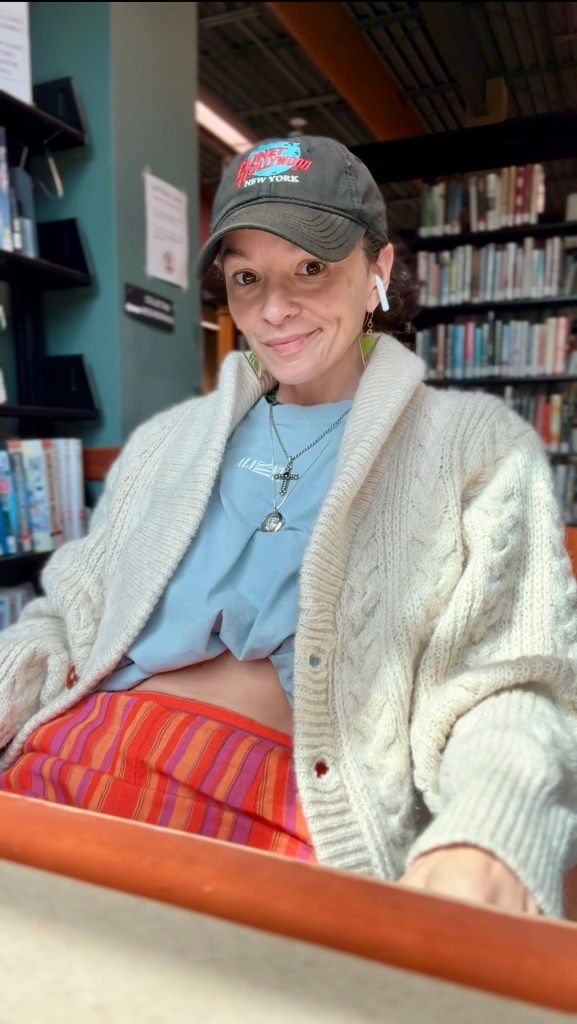
Missouri is still in the process of making up her mind in regard to which season we are in, but that hasn’t stopped me from pulling out my cozy layers for the cool weather during the early hours of the day. My favorite piece to snuggle up in lately has been my thrifted Pendleton wool knit I found for the stellar price of $5.00 during the summer.
Up until I found my Pendleton I had been wearing a classic looking knit by BCBG that I purchased back in 2022. When I started learning about fabric frequency and what synthetic fibers were composed of I was beyond bummed because my beloved BCBG knit was primarily polyester. A little over a year later I stumbled across the perfect replacement in the men’s section at one of the thrifts I regularly visit. My jaw might as well have hit the floor completely because not only was it the perfect replacement, it was also 50% off because of the weekly color sale.
Everything about this sweater made me swoon; the braided details, the shawl neck line, the brown button closure, a perfect oversized fit, and 100% virgin wool! Not only is virgin wool incredibly warm and moisture wicking, it also carries a frequency of 5,000 Hz. Wool is known to be energizing, grounding, and protective when worn- an incredible contribution to the human frequency, especially during the colder months when seasonal depression and low energy levels are more frequent.
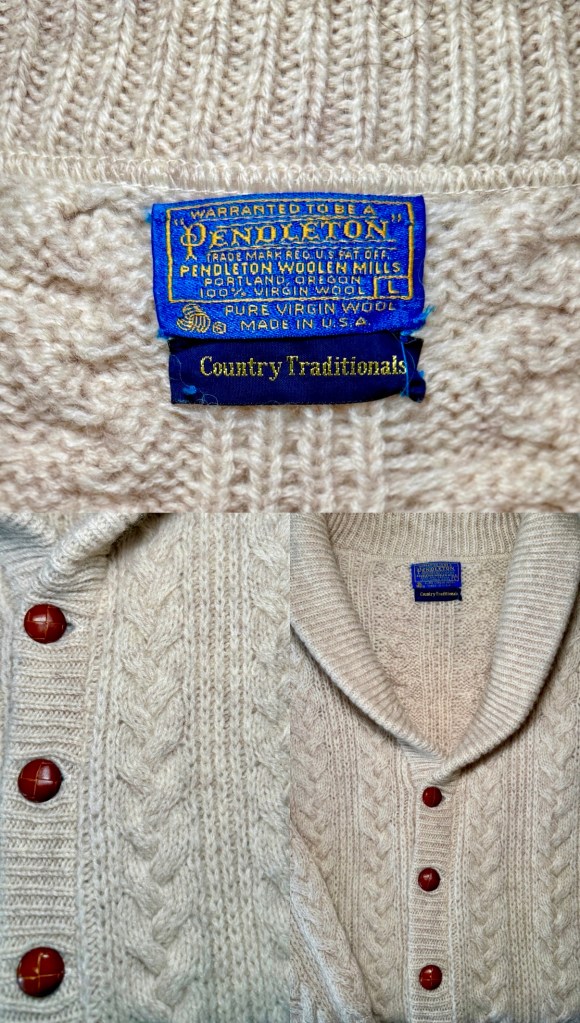
In addition to the energetic benefits, virgin wool is the pinnacle of wool due to it being unprocessed. This type of wool retains the natural strength and elasticity of the fiber itself. These factors are major in the longevity of the garment, especially when cared for correctly. This particular knit was made by Pendleton somewhere between the late 1980s and early 1990s (shout out to Microsoft Co-Pilot for helping me research)- for this piece to be in such fabulous condition 20+ years after it’s initial production is truly a testament to how natural fibers can stand the test of time!
As a former wardrobe stylist, it makes sense to me why brands charge $200+ for natural fiber garments. These types of garments are investment pieces that you wouldn’t have to replace every season or year because, when cared for correctly, they can last decades. With that being said… you don’t necessarily have to pay $200+ to acquire investment pieces when you know what to look for at your local thrift. While I initially started reading the ‘ingredients’ label of each garment I scoped out while shopping because I was concerned about the frequency of the fabric, I quickly realized that I could build up a lush wardrobe filled with investment pieces for a fraction of the cost. I am a woman who loves high quality fashion and a great deal (especially in this economy).
If you ever come across virgin wool while shopping your local thrift I highly recommend you consider the investment!

 129A
129A 
Leave a comment